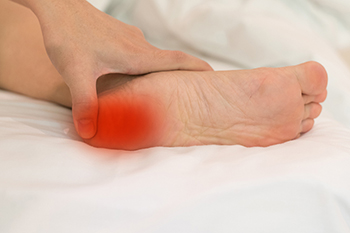
Sever's disease is a common cause of heel pain in children and adolescents, especially during growth spurts. The condition develops when the growth plate at the back of the heel becomes irritated from repeated stress and pulling of the Achilles tendon. It is often seen in active children who participate in running and jumping sports, such as soccer, basketball, or gymnastics. Symptoms may include pain at the back or bottom of the heel, tenderness, limping, and discomfort that worsens during activity. The heel may appear slightly swollen, and some children walk on their toes to reduce pressure. Tight calf muscles, flat feet, or wearing poorly supportive shoes can increase strain on the heel. A podiatrist can evaluate the foot structure, gait, and level of inflammation to confirm the diagnosis and rule out other causes of heel pain. Treatment may include wearing supportive footwear, activity modification, and heel padding to reduce stress on the growth plate. If your child has ongoing heel pain, it is suggested that you schedule an appointment with a podiatrist for effective relief tips.
Sever's disease often occurs in children and teens. If your child is experiencing foot or ankle pain, see one of our podiatrists from Advanced Foot & Ankle Associates, PLLC. Our doctors can treat your child’s foot and ankle needs.
Sever’s Disease
Sever’s disease is also known as calcaneal apophysitis, which is a medical condition that causes heel pain I none or both feet. The disease is known to affect children between the ages of 8 and 14.
Sever’s disease occurs when part of the child’s heel known as the growth plate (calcaneal epiphysis) is attached to the Achilles tendon. This area can suffer injury when the muscles and tendons of the growing foot do not keep pace with bone growth. Therefore, the constant pain which one experiences at the back of the heel will make the child unable to put any weight on the heel. The child is then forced to walk on their toes.
Symptoms
Acute pain – Pain associated with Sever’s disease is usually felt in the heel when the child engages in physical activity such as walking, jumping and or running.
Highly active – Children who are very active are among the most susceptible in experiencing Sever’s disease, because of the stress and tension placed on their feet.
If you have any questions, please feel free to contact one of our offices located in Lake Worth and Aledo/Willow Park, TX . We offer the newest diagnostic and treatment technologies for all your foot care needs.

Suffering from this type of pain? You may have the foot condition known as Morton's neuroma. Morton's neuroma may develop as a result of ill-fitting footwear and existing foot deformities. We can help.
 Patients who have endured a broken toe often notice daily activities can be difficult to accomplish. Many people fracture their toe from trauma, such as dropping something heavy on it, or by stubbing it against a piece of furniture. The symptoms often experienced with this type of injury include severe pain and discomfort, swelling, and the affected area may appear to be bruised. Minor fractures can be treated effectively by using the buddy taping method. This consists of taping the broken toe to the toe next to it, and this is often helpful in providing the necessary support as the healing process begins. It is beneficial to rest and elevate the affected foot, and this may help to diminish any existing swelling. If you have broken your toe, it is suggested that you schedule an appointment with a podiatrist, who can perform a proper diagnosis and begin the best course of treatment.
Broken toes may cause a lot of pain and should be treated as soon as possible. If you have any concerns about your feet, contact one of our podiatrists from Advanced Foot & Ankle Associates, PLLC. Our doctors will treat your foot and ankle needs.
What Is a Broken Toe?
A broken toe occurs when one or more of the toe bones of the foot are broken after an injury. Injuries such as stubbing your toe or dropping a heavy object on it may cause a toe fracture.
Symptoms of a Broken Toe
- Swelling
- Pain (with/without wearing shoes)
- Stiffness
- Nail Injury
Although the injured toe should be monitored daily, it is especially important to have a podiatrist look at your toe if you have severe symptoms. Some of these symptoms include worsening or new pain that is not relieved with medication, sores, redness, or open wounds near the toe.
If you have any questions please feel free to contact one of our offices located in Lake Worth and Aledo/Willow Park, TX . We offer the newest diagnostic tools and technology to treat your foot and ankle needs.
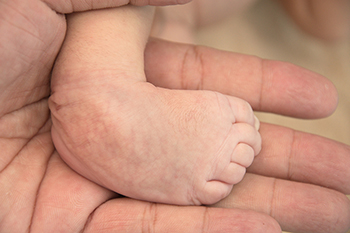
Some children are born with or develop foot alignment conditions that affect how the foot looks and functions. Clubfoot is a condition where the foot turns inward and downward, often requiring early treatment to guide proper positioning. Metatarsus adductus is another condition where the front part of the foot curves inward, giving it a bean-like shape. These conditions can vary in severity, and while some improve as a child grows, others need medical care to prevent long-term problems. Parents may notice unusual foot shape, uneven walking, or difficulty fitting shoes properly. Early evaluation is important to support normal development and movement. A podiatrist can assess the structure of the foot, monitor growth, and recommend treatments such as stretching, bracing, or other interventions if needed.If your child has an unusual foot shape or walking pattern, it is suggested that you seek care from a podiatrist.
Congenital foot problems require immediate attention to avoid future complications. If you have any concerns, contact one of our podiatrists of Advanced Foot & Ankle Associates, PLLC. Our doctors can provide the care you need to keep you pain-free and on your feet.
Congenital foot problems are deformities affecting the feet, toes, and/or ankles that children are born with. Some of these conditions have a genetic cause while others just happen. Some specific foot ailments that children may be born with include clubfeet, polydactyly/macrodactyly, and cleft foot. There are several other foot anomalies that can occur congenitally. What all of these conditions have in common is that a child may experience difficulty walking or performing everyday activities, as well as trouble finding footwear that fits their foot deformity. Some of these conditions are more serious than others. Consulting with a podiatrist as early as possible will help in properly diagnosing a child’s foot condition while getting the necessary treatment underway.
What are Causes of Congenital Foot Problem?
A congenital foot problem is one that happens to a child at birth. These conditions can be caused by a genetic predisposition, developmental or positional abnormalities during gestation, or with no known cause.
What are Symptoms of Congenital Foot Problems?
Symptoms vary by the congenital condition. Symptoms may consist of the following:
- Clubfoot, where tendons are shortened, bones are shaped differently, and the Achilles tendon is tight, causing the foot to point in and down. It is also possible for the soles of the feet to face each other.
- Polydactyly, which usually consists of a nubbin or small lump of tissue without a bone, a toe that is partially formed but has no joints, or an extra toe.
- Vertical talus, where the talus bone forms in the wrong position causing other bones in the foot to line up improperly, the front of the foot to point up, and the bottom of the foot to stiffen, with no arch, and to curve out.
- Tarsal coalition, when there is an abnormal connection of two or more bones in the foot leading to severe, rigid flatfoot.
- Cleft foot, where there are missing toes, a V-shaped cleft, and other anatomical differences.
- Macrodactyly, when the toes are abnormally large due to overgrowth of the underlying bone or soft tissue.
Treatment and Prevention
While there is nothing one can do to prevent congenital foot problems, raising awareness and receiving neonatal screenings are important. Early detection by taking your child to a podiatrist leads to the best outcome possible.
If you have any questions, please feel free to contact one of our offices located in Lake Worth and Aledo/Willow Park, TX . We offer the newest diagnostic and treatment technologies for all your foot care needs.
